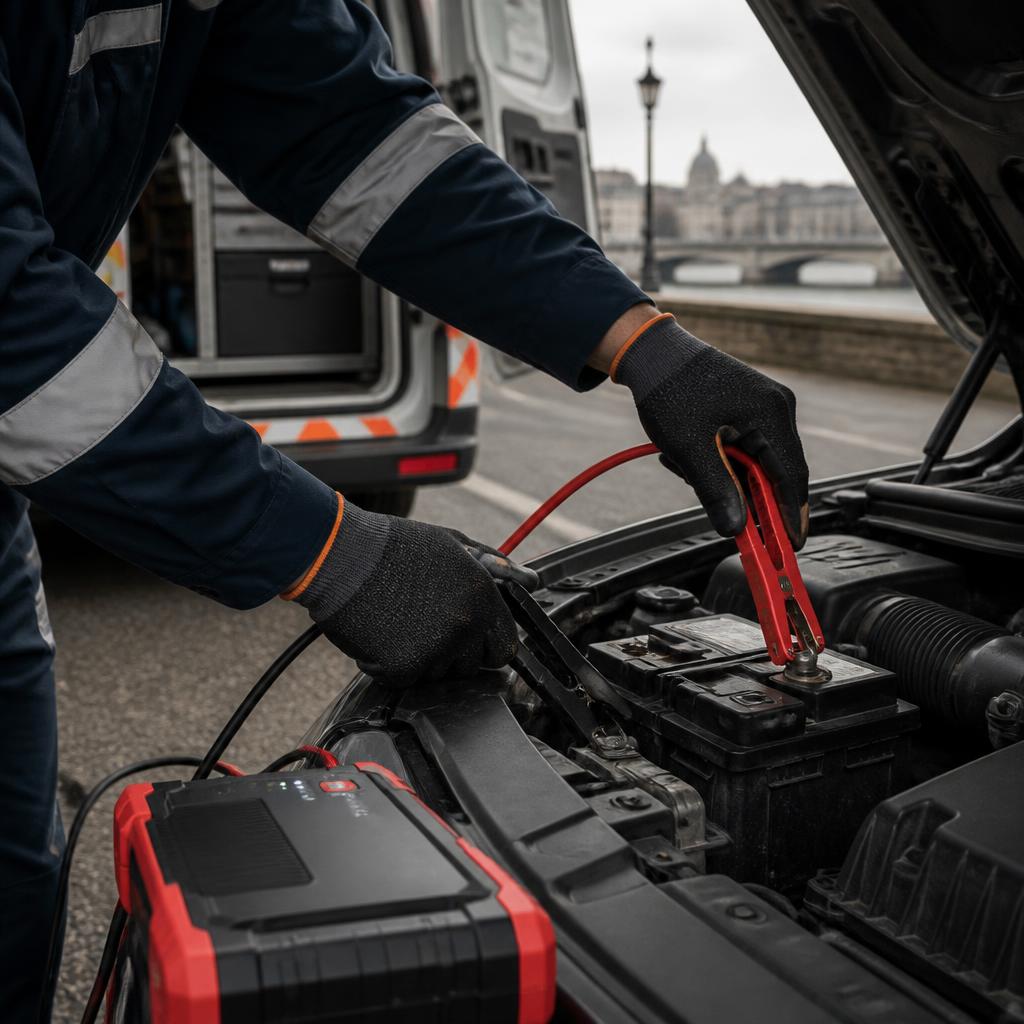
Describe what the car is doing
Tell us whether the engine turns slowly, clicks, stays silent or starts and then stops. Mention dim lights, warning messages, recent battery problems or a boost that did not last. These observations help frame the conversation but cannot confirm whether the battery, alternator, starter or another component is responsible.
Battery assistance versus a jump start
A jump start may be considered where a discharged 12-volt battery is suspected and the vehicle maker permits it. Battery assistance is broader: if a boost is unsafe, not suitable or does not work, the next step may be different. Do not connect equipment when the manual, terminals or battery condition are unclear.
Know when to stop and ask for help
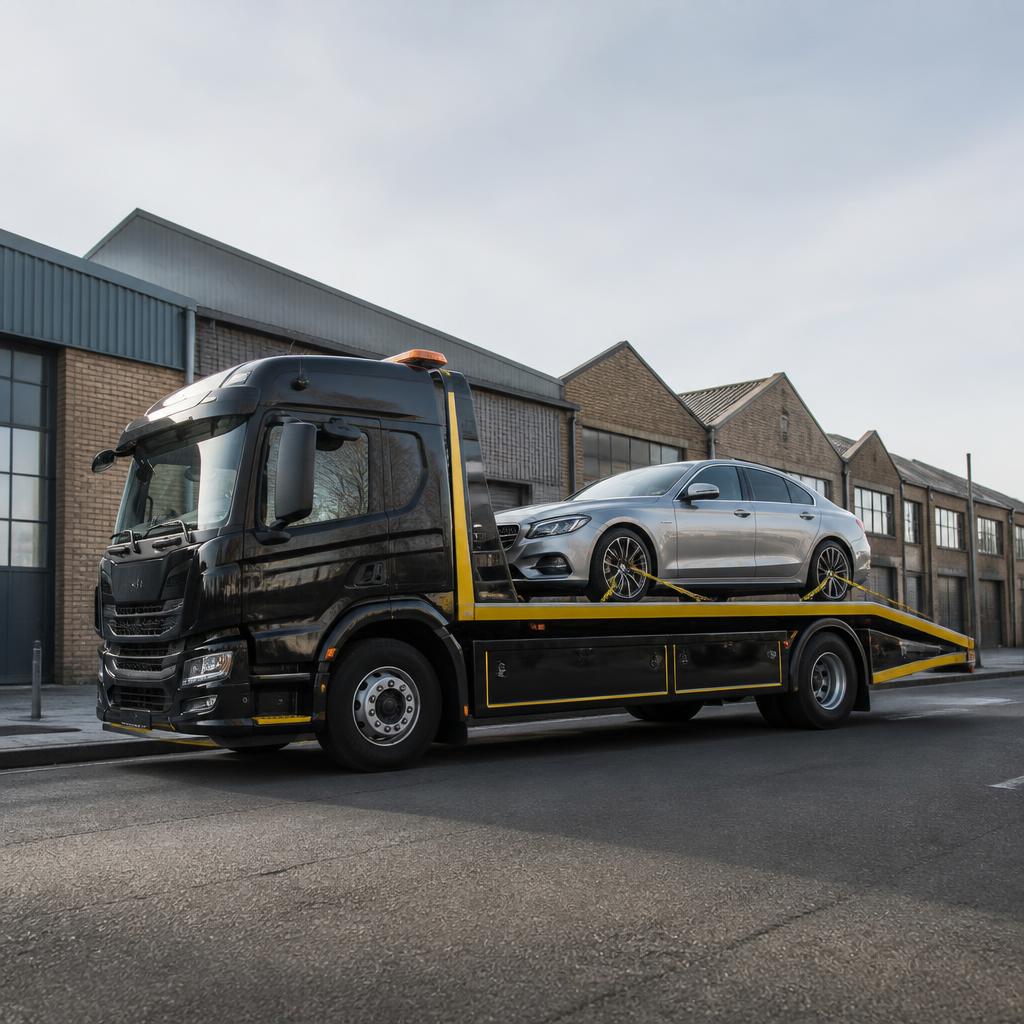
Do not touch a battery that is leaking, swollen, damaged or unusually hot. Avoid roadside work beside traffic and keep away from high-voltage parts in hybrids and EVs. If the vehicle remains immobilised, recovery may be more appropriate than repeated starting attempts.
What to share on the call
Give us the make and model, exact location, access details and what happens when you try to start the car. Mention if the issue has happened before and where the vehicle needs to go if it cannot be started. The available assistance and any cost will be explained before you decide.
If you are asking specifically about a boost, read about jump-start assistance and when it may not be suitable.
For broader help at the vehicle, see roadside assistance in Dublin.