Key takeaways
- The exact vehicle manual and manufacturer instructions govern how it may be moved.
- Share make, model, drivetrain and any warning or mobility limits.
- Do not force a vehicle or handle high-voltage components.
On this page
Follow the vehicle-specific instructions
Some EVs can be damaged if moved with driven wheels on the road. The correct method depends on the make, model and fault. Check the owner’s manual or manufacturer guidance and share it with the recovery provider if available.
Do not handle high-voltage components
Do not touch orange cables, damaged battery areas or exposed components. If there is smoke, fire, unusual heat or immediate danger, move away if safe and call emergency services. Ask the provider to confirm a suitable transport method before moving the vehicle.
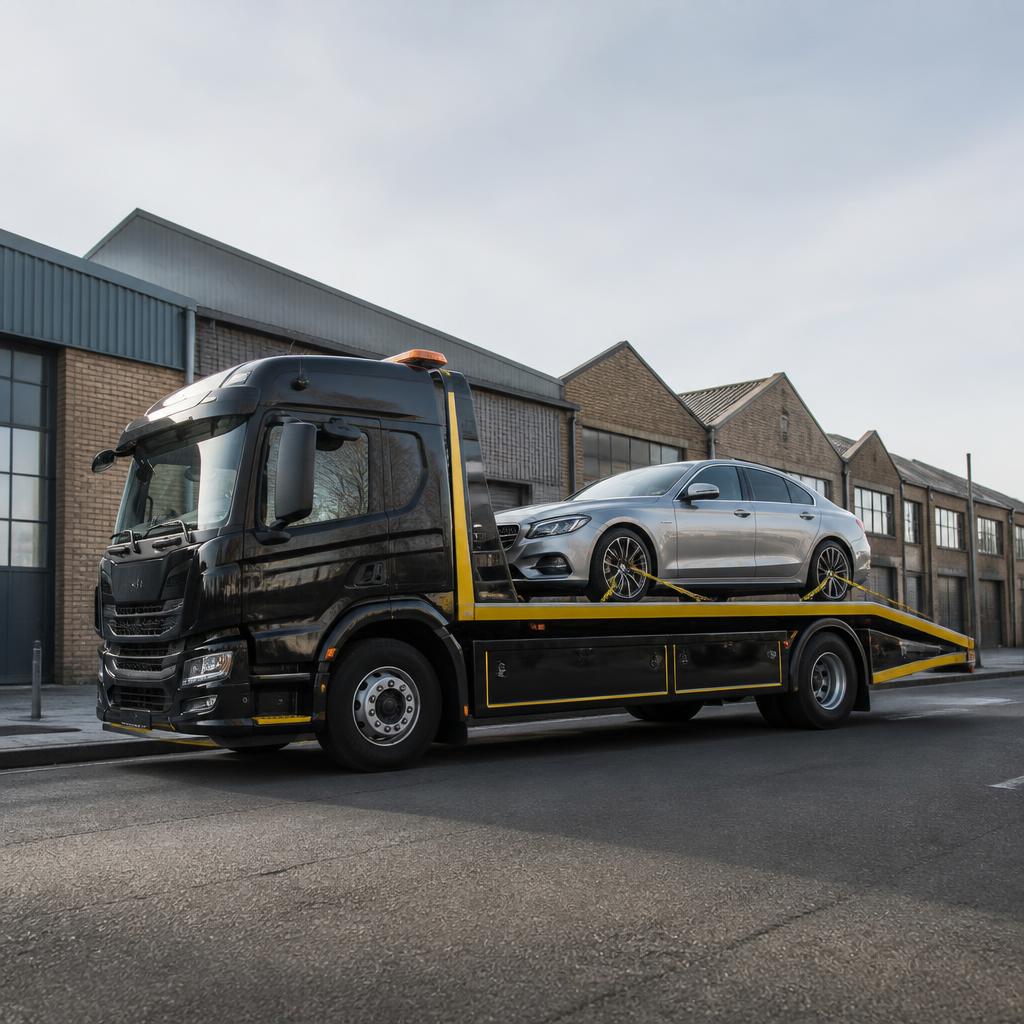
For transport, share the EV’s model-specific recovery instructions when discussing vehicle transport.
Other options to discuss for this vehicle or situation.
Questions drivers ask
Can an EV be towed with its wheels on the road?
It depends on the make, model and fault. Follow the manufacturer’s recovery instructions; do not assume ordinary towing or neutral is safe.
What if the EV battery is flat?
A depleted traction battery does not establish how the vehicle can be moved. Check the manual and tell the provider what the display shows.
Should I touch orange cables or a damaged battery?
No. Keep away from high-voltage parts. If there is smoke, fire, unusual heat or immediate danger, move away if safe and call emergency services.
What details should I share?
Make, model, warning messages, wheel condition, whether it powers on or rolls, collision damage and location/access details.
Do hybrid instructions differ too?
Yes. Follow the instructions for the specific hybrid and share its exact make and model with the recovery provider.
Reviewed by ASAPTOW.ie / Dublin towing & vehicle recovery team